

This analysis draws on reporting by Rafael Mangual, Daniel Di Martino, and Stu Smith in the City Journal Podcast, November 12, 2025. Additional research and framing by GMBAI assistant using investigative methodology.
AI Disclaimer: This article was created with an AI assistant, based on the cited podcast transcript and public documents. While facts have been verified through multiple sources, readers should consult original sources for complete context.
Videos by Stu Smith
Humility is the most difficult
of all virtues to achieve;
nothing dies harder than
the desire to think well of self.”
~ T. S. Eliot
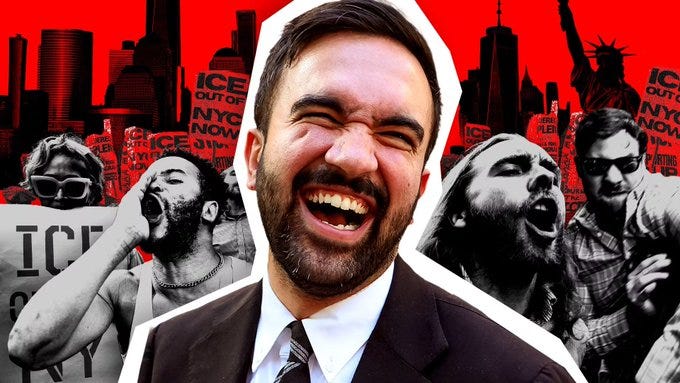
Zohran Mamdani won the New York City mayoral race with the backing of the Democratic Socialists of America, an organization most voters probably think wants America to look more like Norway. The reality is darker and more organized. The DSA’s National Political Committee includes 13 members from explicitly communist caucuses. Its International Committee makes regular trips to Venezuela and Cuba, where members meet with dictators to study their methods.
One of Mamdani’s prominent supporters, Manolo de los Santos, traveled to Caracas after Venezuela’s fraudulent 2024 election to congratulate Maduro on stealing it. Mamdani himself praised Venezuela’s elections a decade ago as “not so shabby.”
This isn’t a political party in the traditional American sense. It’s a multi-tendency organization where Maoists, Marxist-Leninists, and Bernie Sanders supporters coordinate strategy despite fundamental disagreements about whether to pursue electoral politics or street revolution. They maintain discipline through fanatical adherence to Robert’s Rules of Order and attract highly organized personalities who thrive on process. And they’re building an infrastructure across American cities that will outlast any single election cycle.
The Organizational Structure
The DSA operates through a complex system of national leadership, local chapters, and ideological caucuses that function like warring houses in a political drama. The National Political Committee currently splits 13 to 12 between hardline communist factions and what the organization internally calls the “right”*meaning the faction that believes in winning elections rather than just organizing protests. In DSA terminology, supporting electoral politics makes you a rightist. That’s how far left the baseline is.
The major caucuses include Groundworks, focused on electoral victories and reform; Red Star, explicitly Leninist in orientation; Socialist Majority; Marxist Unity Group; and Springs of Revolution, which refuses to call itself a caucus because the term isn’t revolutionary enough. These factions disagree on fundamental questions about whether to govern the capitalist state or destroy it from outside. But they work together because individuals with exceptional organizing talent rise to leadership positions and impose order on the chaos.
One such figure is Hazel, an NPC member whose militant devotion to Robert’s Rules of Order keeps meetings on track despite the ideological warfare. This is the DSA’s secret weapon: attracting highly educated, process-obsessed personalities who were raised in organized households, went to elite schools, and learned that everything from Montessori education to college activism follows strict procedural rules. They’re disaffected but disciplined. They want revolution but they want it properly scheduled with clear agendas and voting procedures.
The Foreign Connections
Daniel Di Martino, a Venezuelan immigrant who writes for City Journal, traces the most troubling aspects of the DSA’s operation: its ties to foreign authoritarian regimes. The People’s Forum in New York City, a major organizing hub that supported Mamdani’s campaign, is funded by a Chinese American billionaire. The space features flags of North Korea and photographs of Castro, Mao, and Che Guevara. It’s not subtle about its ideological commitments.
The DSA’s International Committee makes regular study trips to Venezuela and Cuba. Not to Oslo or Stockholm, where democratic socialism supposedly works. To Caracas and Havana, where it manifestly doesn’t. Members return from these trips and organize pro-Palestine protests in New York, mixing anti-Israel activism with broader anti-American messaging. The connections aren’t coincidental. They reveal an organization that takes inspiration from authoritarian leftist regimes, not from Nordic social democracies.
Foreign funding flows through nonprofit structures that are difficult to trace and nearly impossible to prosecute under current FARA regulations. As long as foreign officials don’t explicitly direct American activists to take specific actions, the relationship stays legal. A Venezuelan or Cuban official can tell DSA members that certain policies would make them very happy and align with their interests, but as long as they don’t say “go do this,” there’s no violation. The result is American radicals coordinating with foreign authoritarians in ways that serve both parties’ interests without technically breaking the law.
Di Martino argues transparency requirements would expose much of this network. Hospitals don’t hide foreign donations because there’s nothing suspicious about British philanthropy funding cancer research. But when Chinese money flows to organizations hanging North Korean flags and organizing protests against American allies, transparency would reveal coordination that most Americans would find unacceptable. He estimates 90 percent of the DSA’s operational capacity could be eliminated by banning or exposing foreign nonprofit funding.
The Demographic Surprise
The DSA’s base isn’t who you’d expect. A recent YouGov poll showed socialism polling higher among Americans making over $100,000 annually than among those making under $50,000. The movement attracts young, highly paid professionals in their twenties and thirties, not struggling working-class voters. This distinguishes American socialism from Venezuelan or Cuban varieties, where the poor provided mass support for authoritarian leaders.
The American version draws from college-educated elites who feel entitled to lifestyles they can’t afford on even impressive salaries. They graduate from Columbia or Georgetown expecting to live like characters in prestige television shows*brownstones on Central Park West, unlimited restaurant budgets, $500 monthly gym memberships. When a $100,000 job at McKinsey doesn’t support that fantasy, they don’t adjust expectations. They blame capitalism and join organizations promising to restructure society so their preferred lifestyle becomes a human right.
It’s the only revolutionary movement in history where the vanguard complains about brunch prices while planning to abolish private property.
This creates the bizarre dynamic where relatively wealthy young professionals adopt the revolutionary language developed by actual poor people in actual oppressed societies. They’re not facing material deprivation. They’re facing the realization that elite credentials don’t automatically translate into elite consumption patterns in expensive cities. The solution, in their minds, isn’t to move somewhere cheaper or adjust expectations but to reorganize the entire economic system.
Di Martino attributes this partly to education. Universities spent decades teaching students to feel guilty about their advantages, their race, their gender, their wealth. Intersectionality and DEI ideology provided frameworks for reinterpreting personal disappointment as systemic oppression. The strategy worked because Americans generally want to become rich, so traditional rich-versus-poor messaging didn’t resonate. But tell college-educated whites they’re oppressors who should feel guilty about their privilege while also victims of a system that won’t give them the status they deserve, and you create ideological confusion that organizations like the DSA can exploit.
The Electoral Strategy
The DSA currently debates whether to focus on winning elections or maintaining ideological purity through street organizing. The Liberation Caucus condemned Mamdani during his campaign for being too moderate, then shifted to supporting him after he won. This reveals the tension: electoral success requires compromises that hardcore revolutionaries oppose, but success also brings power that even hardcore revolutionaries want to access.
Mamdani’s victory will likely push the organization toward electoral politics, at least temporarily. Winning the New York mayoralty demonstrates that their strategy can work in America’s most visible local races. But success creates its own problems. Governing requires working within existing systems, which means cooperating with people like Governor Kathy Hochul who DSA members view as centrist obstacles. The organization will blame any failures on capitalist structures preventing implementation of their agenda, setting up a perpetual excuse for why their policies don’t work.
To maintain the volunteer base that elected Mamdani without forcing everyone to join the DSA formally, New York City’s chapter created a new organization called Our Time. This allows supporters to participate in activism without confronting the fact that they’re working alongside Maoists. Many people who volunteered for Mamdani genuinely don’t know the ideological composition of the organization behind him. They thought he was charming. They liked his message about free buses and affordable housing. They didn’t realize they were helping install an administration advised by people who make study trips to meet with dictators.
When some of these volunteers join the DSA and discover there are Maoists in the meetings, they express shock. But they don’t leave in large numbers. They get acclimated. They learn the language. They start thinking the extreme positions aren’t so extreme after all. That’s how radicalization works in organizational settings*slowly, through exposure and normalization, until ideas that would have seemed insane six months earlier become unremarkable talking points.
What Voters Didn’t Know
The median New York voter who supported Mamdani probably thinks the DSA wants policies similar to those in Scandinavian social democracies. They don’t understand the organization maintains formal connections to authoritarian regimes. They don’t know about the internal caucus structure or the ideological battles between Leninists and democratic socialists. They don’t realize the National Political Committee is controlled by explicitly communist factions.
This information gap matters because it means electoral victories come through systematic deception about the organization’s actual goals. Mamdani campaigned on affordability and transportation. He didn’t campaign on abolishing police or praising Venezuelan electoral systems or maintaining relationships with People’s Forum leaders who meet with Chinese-backed authoritarian propagandists. Voters got the friendly democratic socialist messaging. The organizational infrastructure got a foothold in city government.
The pattern repeats across other cities where DSA candidates have won. Portland’s city council features DSA members pushing resolutions to investigate F-35 fighter jets, as if city councils have any business conducting foreign policy reviews of military aircraft. College campuses host YDSA chapters that recruit on every major university. Cornell produced the nation’s youngest elected DSA official in Ithaca. The organization grows through a combination of genuine appeal among young educated professionals and institutional infiltration that most people don’t notice until it’s entrenched.
Republican critics warning about this get dismissed as hysterical. The DSA responds by pointing to Nordic countries and asking why Americans are scared of social democracy. But they don’t go on field trips to Oslo. They go to Caracas. They don’t put up Norwegian flags at their headquarters. They put up North Korean flags. The revealed preferences tell a different story than the public messaging.
The Policy Agenda
Beyond economics, the DSA pushes radical positions on policing, criminal justice, and public safety that will get people killed. Prison abolition isn’t a metaphor in these circles. They literally want to eliminate incarceration. Defunding police isn’t about reallocating some resources to social services. They want alternatives to policing that would leave criminals free to victimize low-income minority communities who can’t afford private security.
Mamdani’s proposed Department of Community Safety follows this model. It’s meant to take over functions currently handled by the NYPD, including mental health responses and quality-of-life enforcement. Whether this works better than ThriveNYC’s billion-dollar mental health initiative remains to be seen. But the DSA’s position isn’t that it needs to work better than current policing. Their position is that policing itself is illegitimate and needs to be abolished regardless of the consequences for public safety.
This is where ideology overrides evidence. Every time these policies get implemented, crime increases. Every time de-policing happens, the poor suffer most. But the DSA treats these failures as proof that reforms didn’t go far enough rather than evidence the approach is wrong. They’ll blame residual capitalism, or racist systems, or insufficient funding, or political sabotage by moderates. They won’t admit the fundamental premise is flawed.
Rafael Mangual, who covers criminal justice for City Journal and Manhattan Institute, emphasizes this point. The DSA’s public safety agenda will lead to actual deaths of real people in high-crime neighborhoods. More criminals on the streets because of decarceration. Fewer criminals caught because of de-policing. The victims will be disproportionately the low-income minorities the DSA claims to represent. That reality might eventually wake people up to how destructive these ideas are. But a lot of people will suffer before that happens.
The Institutional Foothold
Mamdani’s transition committees reveal how the DSA translates electoral victory into institutional power. Ben Furnas from Transportation Alternatives gets influence over DOT hiring and policy. Susan Herman from the failed ThriveNYC program gets input on the new Department of Community Safety. The pattern shows progressive activists and recycled officials from previous failed initiatives being invited to build new versions of the same programs.
This is how government grows without improving. Programs fail, get rebranded, and reappear with the same people running them. The institutional memory is selective. Connection to past failures becomes a credential rather than a disqualification because you understand how these systems work. Whether they actually work for citizens matters less than whether you know how to navigate bureaucracy, secure funding, and use therapeutic language to justify budget requests.
The joke about Susan Herman is that running a billion-dollar government boondoggle apparently requires the same skills as selling $340 cheese boards to Brooklyn gentrifiers. Both involve convincing people that vague promises justify premium pricing. The DSA specializes in this kind of salesmanship. They’re not building better government. They’re building larger government run by people who know how to make expansion sound like progress.
What Happens Next
The DSA faces a choice about whether success will be their downfall. Mamdani now has to govern, which means implementing ideas that might create such obvious disasters that even sympathetic voters turn against them. Or he might moderate enough to stay viable, which would disappoint the hardcore factions that brought him to power. Either way, the internal tensions that currently simmer will eventually boil over.
But even if Mamdani fails spectacularly, the infrastructure remains. The caucuses, the chapters, the organizing networks, the foreign funding connections, the pipeline from college campuses to city councils. The DSA learned from Bernie Sanders’s campaigns that American voters will support candidates using socialist language if it’s packaged correctly. They learned from successful local races that winning requires discipline and organization, not just revolutionary fervor.
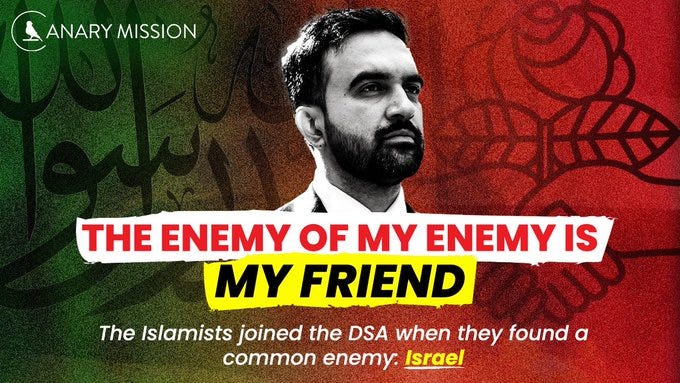
They’re building something durable that will outlast individual electoral defeats. The question is whether Americans understand what they’re building and whether they care enough to stop it. Di Martino warns that if socialism comes to America, it will come through votes, not bullets. It will be democratic initially, like in Venezuela, before the elected socialists consolidate power and make reversal nearly impossible.
New York just elected a mayor backed by an organization that studies authoritarian regimes, maintains foreign funding networks, organizes along explicitly communist factional lines, and pushes policies that will increase crime and expand government failure. Most voters have no idea. They thought they were voting for affordable housing and free buses. They got an institutional apparatus that makes regular trips to Caracas and hangs North Korean flags at its headquarters.
That’s the gap between electoral messaging and organizational reality. And it’s how radicals win in America: not by being honest about their goals, but by being extremely organized about pursuing them while everyone else isn’t paying attention.


